
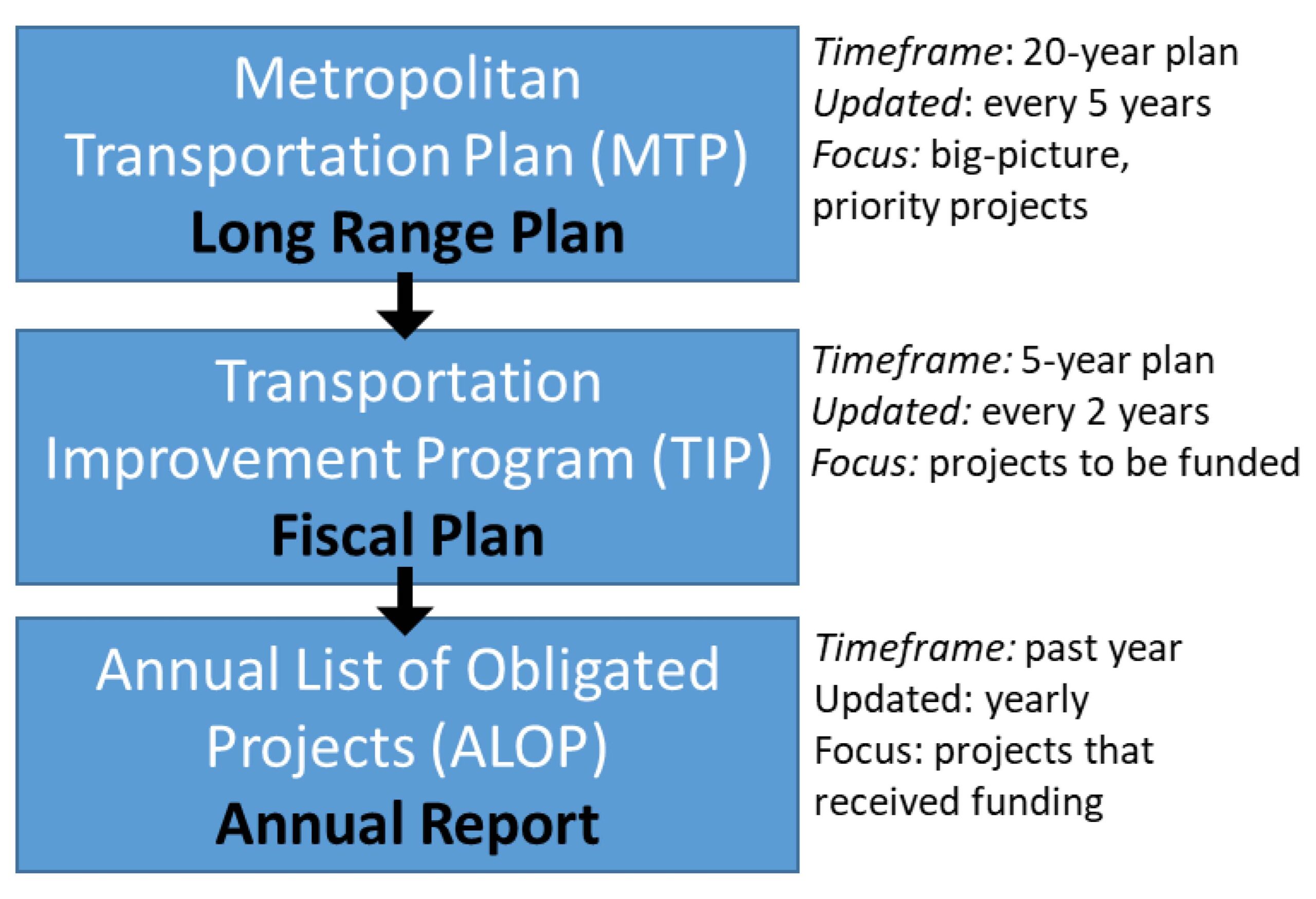
CAMPO’s primary purpose is the local coordination and distribution of federal transportation funds. To be eligible for these funds, CAMPO must prepare, adopt, and maintain a long-range plan called the Metropolitan Transportation Plan (MTP). The MTP forecasts changes in the Metropolitan Planning Area (MPA), identifies and prioritizes needs, sets goals, and establishes a financial plan. Local Projects must be in the MTP to be eligible for federal funding (up to 80% of project costs) and ultimately included in the Transportation Improvement Program (TIP). The MTP must be updated every five years to ensure it reflects ever-changing community conditions and transportation needs. The MTP is also occasionally amended to include regional projects of significance.
2050 Metropolitan Transportation Plan (Adopted July 13, 2026)
Click here for the full document. The document is 90 pages designed at 11″x17″. Use orange hyperlinks throughout the document to quickly jump to other sections or additional information on our website. Use links below to view a particular chapter (orange hyperlinks may not work with chapter-only documents).
- Columbus Area MPO
- Transportation Planning Requirements
- MTP Update Process
Chapter 2: Existing Conditions
- Socioeconomic Factors
- Land Use Plans and Studies
- Environmental Context
- Public Perceptions
Chapter 3: Goal, Objectives, and Performance Measures
- MTP Goals
- Performance-Based Planning and Programming
- Plan Maintenance
Chapter 4: Funding Sources and Revenues
- Funding Sources
- Project Funding Availability
- Fiscal Constraint
- Other MTP Project Types & Typical Funding Revenues
- General Design Considerations
- Existing Roadway Conditions
- Existing Freight Conditions
- Project Prioritization Criteria
- Roadway Program and Fiscal Constraint
- Model Scenario Evaluation
- Typical Funding Sources
Chapter 6: Spot Safety Projects
- Existing Safety Conditions (including crash data)
- Project Prioritization Criteria
- Possible Countermeasures and Project Locations
- Typical Funding Sources
Chapter 7: Bicycle and Pedestrian Projects
- Existing Bicycle and Pedestrian Network Conditions
- Project Prioritization Criteria
- Possible Facility Types and Project Corridors
- Typical Funding Sources
- Existing Transit Services and Partners
- Project Prioritization Criteria
- Typical Funding Sources
- Possible Projects and Priorities
- Existing Bridge Conditions
- Project Prioritization Criteria
- Possible Projects and Priorities
- Typical Funding Sources